Make the Club Work: The Forgotten Secret to Better Golf Swings
One of the biggest mistakes in modern golf instruction is where we place our attention.
Most golfers spend years trying to make their body work.
The great ball strikers often thought differently.
They made the club work.
That simple shift changes everything.
The Club Is Designed to Move
A golf club isn’t supposed to be carried through impact.
It’s supposed to move.
Your role is to create the conditions that allow it to accelerate naturally.
As Ernest Jones wrote more than a century ago, the golfer shouldn’t simply swing the club.
He should make the club work.
That philosophy remains just as powerful today.
Lag Is Meant to Be Released
During the backswing, the club naturally develops lag.
Many golfers then spend enormous amounts of effort trying to hold onto it.
Instead, think differently.
Create the lag.
Then aggressively—but fluidly—allow it to release.
The goal isn’t to preserve lag.
The goal is to use it.
That simple intention immediately changes the feeling of the golf swing.
Swish the Club
One of the easiest athletic intentions is surprisingly simple.
Build the backswing.
Create the lag.
Then simply swish the club beyond the golf ball.
The swish isn’t forced.
It isn’t muscular.
It’s an accelerating movement that allows the club to perform the task it was designed for.
This creates speed through freedom rather than tension.
Hogan Didn’t Just Swing the Club
My interpretation of Ben Hogan goes one step further.
I don’t believe Hogan was merely swinging the clubhead.
I believe he was constantly making the club work for him.
His grip, his release pattern and his intentions all encouraged the club to become increasingly dynamic through impact.
That concept became one of the foundations behind the Aggressive Fluid Release pattern.
The Club Determines the Shot
When you understand how to make the club work, something fascinating happens.
The same movement intention can produce different golf shots simply by changing where you direct the club’s energy.
Release slightly more toward the right…
You create a push draw.
Release slightly more left…
You begin producing Hogan’s famous controlled fade.
The movement remains remarkably similar.
Only the intention changes.
Movement Before Positions
This is why Forgotten Master Moves places so much emphasis on movement.
Positions are important.
But movements create positions.
Your brain understands intentions far more naturally than isolated body angles.
Instead of memorising dozens of checkpoints, you can often organise the entire golf swing with one simple objective:
Make the club work.
Build the Pattern First
Of course, this doesn’t replace sound fundamentals.
It sits on top of them.
Once your swing pattern is functioning properly, your only responsibility becomes remarkably simple.
Create the lag.
Swish it through.
Trust the club.
The body will organise itself around that intention far more naturally than most golfers expect.
Final Thoughts
The golf swing is often described as invisible.
You cannot photograph intention.
You cannot freeze acceleration.
What you can do is create better movements.
Making the club work is one of the oldest ideas in golf instruction.
It is also one of the most forgotten.
And perhaps one of the most powerful.
Learn More
Inside the Forgotten Master Moves membership, I teach four classic swing patterns—including the Aggressive Fluid Release pattern inspired by Ben Hogan.
Each is built around one simple principle:
Knowledge first. Movement second. Performance follows.
START THE JOURney – FIND YOUR OLD SChool PATTERN
Your inspirations and your subconscious view of the golf swing matter more than anything when it comes to making a lasting swing change. The goal is to find the pattern that fits you best. Take the quiz and check out the best choice for you below:
FMM EDUCATIONAL PATTERN PAGES
-
Trail Power Hitter Pattern: The Invisible Vertical Power
THE GOLF SWING IS INVISIBLE You can’t see what I really do. I…
-
Aggressive Fluid Release Pattern: Cracking the Hogan Enigma
Cracking THE IMPOSSIBLE ENIGMA? First attempt: seven years ago. There I failed with…
-
Big Arc Swinger Pattern: From Nicklaus to Woods to Scheffler
What’s a big arc golfer? You see that person with a swing that…



Main Website Pages
-
FMM Video Articles — See It. Read It. Understand It.
In early 2025, I started my YouTube channel (find it here), and the format has really grown on me. It allows me to explain, demonstrate, and cover things that text simply can’t. The real…
-
All Articles Library – All Creations in One Place
Everything I’ve created over the years. You have different filterings according to the list below. Wish to watch Youtube videos instead? Then click here to open Wish to visit my Skillest Profile (coach app)?…
-
FMM Academy – Which Pattern Fits You?
Golf instruction has never suffered from a lack of information. It has suffered from a lack of understanding. The FMM Academy was built to help golfers understand why great swings work, how different players…
-
Swing Styles Articles – Explaining Old School Variations
I categorize golf swings into different styles for the sake of clarity and understanding. No golfer fits perfectly into a single swing style, but without a structured framework, you’re essentially shooting in the dark….



Old School General Articles
-
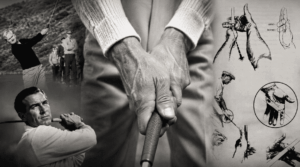
Ben Hogan vs Jack Nicklaus Grip: What’s the Real Difference?
All the old-timers cared about one thing first and foremost. Almost as if it were the gatekeeper to their swing worlds. The grip. Why is it so important? Because it directly connects to how…
-
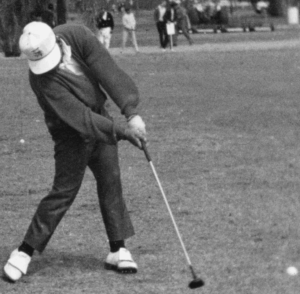
How Lee Trevino Built One of Golf’s Most Accurate Swings
Most golfers trying to hack the golf swing just ruin it, and some, like Lee Trevino, win six majors. From an accuracy perspective, I would say that his motion is the most efficient I’ve…
-
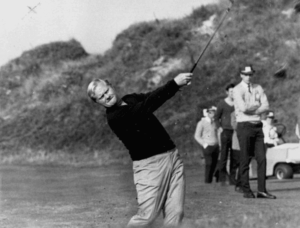
Why Jack Nicklaus Swing Work – Free of Modern “Rules”
Most people have Ben Hogan as their swing god, and sure, he’s awesome, but my personal favorite will always be Jack Nicklaus Swing. The Golden Bear. It’s the simplicity and effortless feel of it…
More FMM Project Articles
-
The Swinging Protocol – In the Core of all Great Golfers?
I have a special interest in the golf world, and that is to understand what actually built the best swings of all time. Not just how they look, but what truly built them. What…
-
A Powerful Golf Swing Clips It – Stop Chasing Divots
We are all performing golf swings based on inner images, muscle memory, and athleticism. These different subconscious images will shape how we perform our motion. A powerful golf swing clips it in a shallow,…
-
Perform Your Backswing in Front of Yourself – The Vertical Lift
The backswing might be the most difficult part of golf. Do it right, and while there are no guarantees of a perfect result, do it wrong and you’ve almost certainly ruined your chances of…