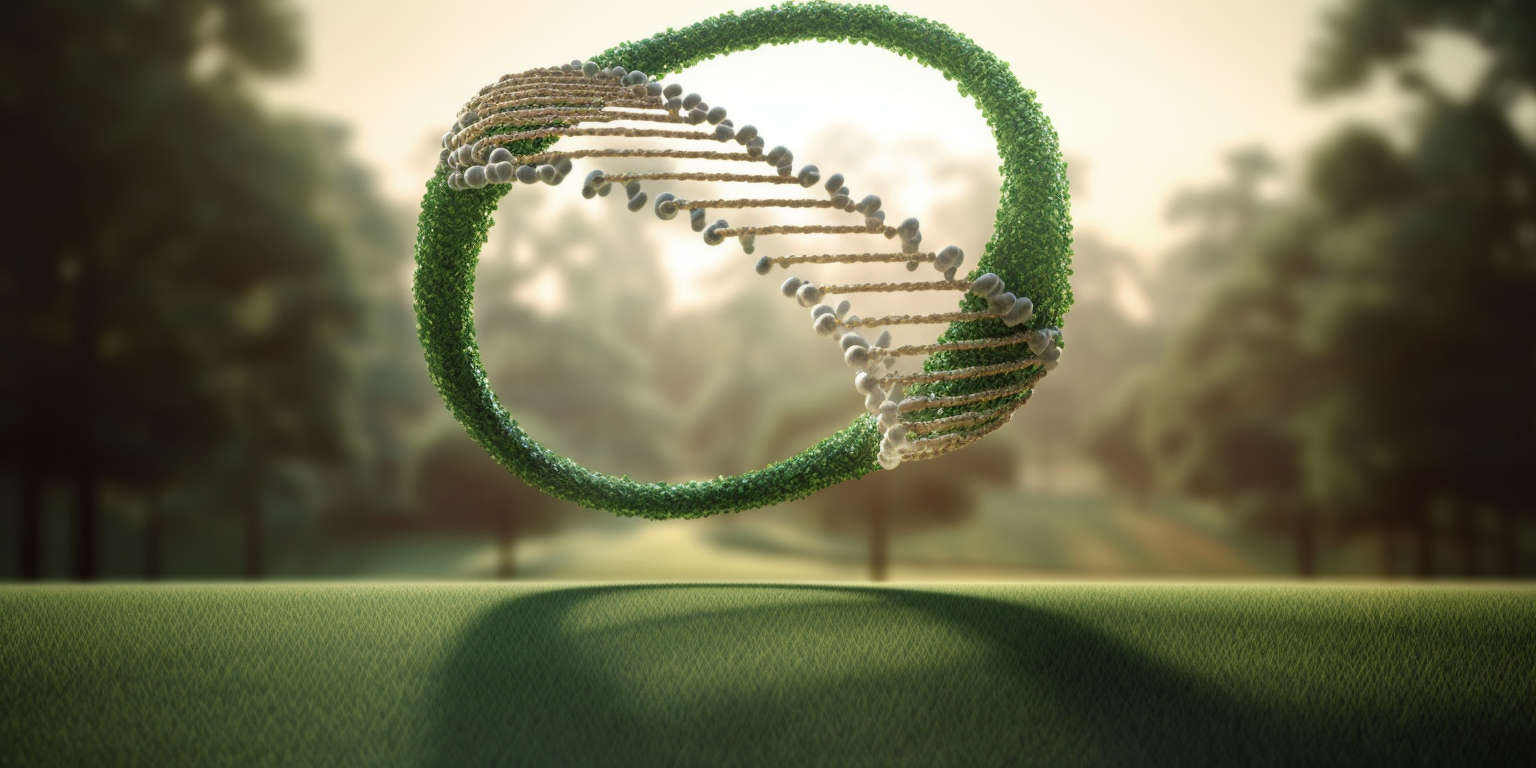
Understanding your Golf Swing DNA – Where You Are Now
Understanding who you are as a golfer—your current swing, habits, and the motivations behind them—is the foundation of any meaningful swing change. Without this self-awareness, you have no solid ground to build upon. You need to recognize your Golf Swing DNA.
This is the second article in my DIY major swing change series. I highly recommend that you start here instead – Must Haves & Major Pitfalls for Major Swing Change.
In the previously mentioned article, I emphasized the importance of having a clear plan—understanding where you are now, where you want to go, and how to get there step by step. This article primarily focuses on In the previously mentioned article, I emphasized the importance of having a clear plan—understanding where you are now, where you want to go, and how to get there step by step. This article primarily focuses on Where You Are Now and touches on Where You Want to Go. and touches on Where You Want to Go.
It’s a pretty abstract piece of work so please read it twice.
Your Inner Image – The Foundation of Your Movement
We perceive our own golf movements in a deeply ingrained, subconscious way. Over time, we’ve absorbed images of golfers on TV, watched our friends play, admired that great player at the club, and—most importantly—built patterns based on our own historic swings and intentions. This ingrained perception is what I call your inner image of your golf swing, and it’s the primary reason you swing the way you do.
Some refer to this as muscle memory, and while that’s not entirely wrong, it’s also not entirely right—it lacks depth. The mind’s power extends far beyond simple repetition.
Take Steve Elkington, for example—he visualizes his swing as a Picasso painting and credits this perspective as the foundation of his abilities. Jack Nicklaus described seeing his motion from a third-person, overhead view, calling it “going to the movies.” Personally, I see my swing as a spinning wheel, where impact is the culmination of power. My intention is to control how fast the wheel spins and how far it sends the ball.
Most golfers never consider this concept, but if you’re making a major swing change, you must first understand what you actually do today.
One of the most common flawed inner images I’ve seen over the years is the simple idea of hitting a golf ball. This mindset leads to a short downswing arc, a steep plane, and an excessively open clubface just before impact. Compare that to Elkington’s Picasso swing, which is longer, bigger, and more fluid—a completely different motion altogether.
Present Intentions = Tweakers of your Inner Image
Your inner image shapes your movement, but you can refine it by assigning yourself specific tasks from a brain perspective. These tasks are often referred to as intentions. In other words, your intentions serve as the tweakers to your existing inner image.
However, there’s a limit to how much intentions can change if your inner image is fundamentally misaligned with them.
For example, let’s say I want to replicate Arnold Palmer’s aggressive follow-through, but my ingrained swing pattern has always felt like chopping an axe into the ball—a common sensation promoted by many teaching philosophies. I try over and over to achieve that signature helicopter-style finish, but no matter what, I just can’t get there. Why? Because my inner image dictates a swing journey that stops abruptly after impact, while my new intention exists in the space beyond it. The two are in direct conflict, making the change nearly impossible.
Individuality = Your Limitations & System Disqualifiers
Beyond your inner image and intentions, your individuality also plays a crucial role. I break it down into three key factors:
Overall Speed – Are you naturally quick or more relaxed? This matters because some swing systems require you to “hold back” or stay passive at certain points in the swing. As a naturally quick person, I’m immediately disqualified from certain protocols that demand too much restraint.
Thinking Style – When can you actually be intentionally active during a swing? Many systems rely on rigid, mechanical swing thoughts, but I can only process movement in an abstract way. That alone eliminates certain approaches for me.
Physical Demands – What physical limitations do you have? Personally, I struggle to apply pressure away from my body, and once again, that means some systems just won’t work for me.
Understanding these three factors helps you find a swing approach that actually suits you instead of forcing yourself into a mold that doesn’t fit.
Inner Image + Intentions + Individuality = Your Golf Swing DNA
Just to clarify one final time before diving deeper: You can only execute movements based on what you already know. The way you swing today is simply a reflection of your inner image and current intentions, shaped by your individual limitations.
Can you change your Golf Swing DNA?
Yes, definitely! But self-awareness is key—you need to truly understand your inner image. Why do you move the way you do? Once you’ve nailed that down, making a change becomes much easier.
Of course, it takes time, but you’ll save yourself countless hours of frustration by being crystal clear about what you’re actually trying to do.
I personally transitioned from a choppy, short movement—where my swing essentially ended right after impact—to a longer, more fluid club journey. The breakthrough came when I realized I couldn’t have a hard stop in my swing. This shift allowed me to create smooth, controlled movements while maintaining the same power as my previous “powerful chop.” Without first redefining my inner image from a chop to a continuous journey, I would have never been able to make that change.
The final article in this series is here: Asking Successful Swing Change Questions. – Where do you want to go?
The Major Swing Change Article Series
-
Simplified Swing Change Plan – PDF Download
Use this entire website to fill out the blank spots in the Simplified Swing Change Plan. The plan itself is a very simple resource that you download, print and then adapt to your own…
-
Basic Swing Change Tips: Small Advice with Big Potential
Making a swing change can be challenging and requires more than most golfers realize. To successfully change any part of your swing, you typically need between 3,000 to 5,000 repetitions (based on my experience)….
-
Asking Successful Swing Change Questions – Where to Go?
You’ve probably figured out by now that I’m not someone who promotes “quick fixes.” Instead, I focus on the deeper foundations of swing change efforts. In all honesty, there’s no other way to make…



Some General Swing Tech Posts (with Videos)
-
Release the Golf Club for Downswing Dynamics – Old School Style
Release the Golf Club for Downswing Dynamics – Old School Style Somewhere in the last decades we were supposed to be afraid of club rotation. I think this train of thought inhibits the ability…
-
The Fade Shot – Fully Released rather than Hold Off
The Fade Shot – Fully Released rather than Hold Off A Weapon with Sharp Edges The fade is my favorite control shot. Not a hold-off fade. Not a cut that’s squeezed out. A fully…
-
Golf Swing Obstacles: 6 Killers of Effortless Power
Golf Swing Obstacles: 6 Killers of Effortless Power Why I Stopped Chasing Data Around five years ago, I began shifting away from hard data and toward softer values in golf instruction. The impact on…

The FMM Swing Articles
-
Flipping in the Golf Swing? Understand and Utilize the Dynamics
“I flipped it, that was a crap shot” has to be in the hall of fame for the most commonly heard phrases on any golf course. Understanding flipping in the golf swing — what…
-
Understanding Hand Dominance Advantage – Magic for Your Golf
Are you right or left hand dominant? Are you swinging from the right or the left? Hand dominance in the golf swing is extremely important yet it has almost zero space in the golf…
-
The Golf Swing Arc: The Leader Behind Your Motion
The highest level of swing technique is to be able to simplify the motion. Over the years I’ve been able to understand what matters and maybe even more importantly, what doesn’t matter, in a…