
Relationship to Power – Key Variations for Better Golf
Power in the golf swing might just be the most important topic. Different swing style have a different relationship to power.
- Vardon, Hagen, Melhorn, Snead, Hogan, Knudsen, Thompson and Player (among others) have something in common.
- Jones, Nicklaus, Watson, Weiskop, Woods and Scheffler have common power denominators.
- Early Mac, Stadler, Langer, Woosnam and Westwood also share common power ground.
I educate about and teach three different swing patterns in the FMM Swing Academy. They are all inspired by old school movement fundamentals since they are, in my opinion, 1) superior from an achievability perspective 2) still lives in the best of the best today.
No Power Understading = No Release = No Fun
If you don’t know how to produce power you will fill the vacuum with “something” and that something is rarely anything good.
Most golfers fill this with over the top movements where they just cut the corner on the downswing arc and demolish their swing in the process. Most slightly better playeres gets in to more shallow positions but still perform (even that they are unlikely to agree) pull shot movements with limited club release and power.
The odd case actually “gets it” and they’ve likely started out as a kid without any muscle strength.
The point is this: 60-90% of your power comes from how you release the golf club and the rest comes from conscious stimulation of this release process (e.g. intentional body rotation, ground force usage etc). Point being – If you don’t properly know how to release the golf club you have a massive disadvantage. That’s also why many great golfers started young because then they had to “get it”.
I’ve identified three different core release styles that I both perform and teach. I prefer these since they are actually achievable (and provides world class striking conditions) rather than the modern delayed “difficuly to do release” (most modern protocols treats the club release as something passive that should happen due to your body movements. Problem? Most, including me (who have shot 64 as lowest score), have a pretty darn hard time performing highly mechanical instruction in certain parts of the golf swing)
Swing Arc Power – The Easiest Power (Big Arc Swinger pattern)?
I love all high performing golf swings but I pretty much favor the most “bang for the buck” concepts above all. The Big Arc Swinger pattern (one of three that I teach) is the inner layer of e.g. Jones, Nicklaus, Weiskopf, Watson, Seve, young Faldo all the way to pre 2005 woods, early Rory and modern Scheffler.
It’s about sending the club out into the swing arc with speed, with smart grip pressure usage and allowing that club to release. Remember Nicklaus being taught power first and accuracy second. When you actually get the centrifugal force going and working in your favor you can start using the follow through hand position as a stimulator of speed acceleration, blade control and added shallowness.
You train your downswing to ignite your engine and then focus on the follow through in your “play the game” swing. Mentally the follow through ties you into visualized shot trajectory and makes it so darn easy to play golf.
Why easy? When you focus the powers in the golf club in a wide arc then the club, hands and the arms becomes the driver of the complete body. You start reacting to the simple athletic intentions rather than going “inside yourself” and try to move your body by itself.
50% of the power comes from your backswing width and your downswing ignition. 50% comes from your follow through acceleration (and you can boost it from time to time, think Tiger club kick back finish positions).
Trail Hand Power Hitting Potential – Downswing Power?
I only care about power that happens together with shallow striking (since it’s the main physical need for impact conditions) and if you are insanely trail arm dominant (like I am, can barely do anything with my left hand.) you can make use of your trail arm power in the downswing.
Most advice tells you to not do anything in the downswing but that’s generic advice operating under the assumption that there’s one golf swing. There are atleast six ways of performing high level golf. I teach three of them due to their inherent achievability.
The Trail Power Hitter pattern that I teach is an AGGRESSIVE downswing move where you use all of your strength to really power that golf club so that you produce 80% of your speed with this intention. It utilizes a trail side body power resistance build up in the downswing to support it. You can’t really see it because it looks like the person is doing it is focusing the follow through but it’s really generated WAY BEFORE the golf ball.
Early Mac, Stadler, Price, Langer, Woosnam, Westwood and possibly Stenson all have steepening shaft planes in the downswing and still they are shallow enought for world class golf. Pretty interesting stuff right?
Backside Shallowness – Easyness or Rotational Boost?
As mentioned in my Transition & Shallowness Article the good stuff in golf needs shallowness and “from the inside” properties. What’s the difference between for instance Ben Hogan and Sam Snead and most modern golfers? Hogan and Snead rotate aggressively and synchronized through the golf ball. Most modern swings have their rotation BEFORE the golf ball (a completely different release pattern).
When you allow your hands to take the backside into the release, you have created some power potential due to lag build up and a delayed release but first and foremost you have created the ability to “attach” someting more onto it. You can attached a release exit that is either just “down the target line” or “intentional body movement stimulated”.
The easy version of this power style (down the target line) is represented by e.g. Lee Trevino and Peter Thompson. They take the backside in the downswing (with a delayed somewhat power filled release) and then force toward the target for additional power. You can see their kneeling through shot which is an athletic reaction to reach the ball. In your mind it feels like straight down followed by straight forward (with enough training it just feels forward after a while). The easisest golf swing of all time? Trevino and Thompson have both been labeled as “short hitters” but they have more majors than most can count.
The hard version of Sam Snead uses the same entry as the above mentioned players but attach a more rotating body from a rather centered position. The hardness comes from the need for tranquility and the ability to actually perform this stimulated rotation. I am, for instance, too itchy to perform his pattern.
The hardest version of backside power is Ben Hogan. He provides so much shallowness with his moves that he can not only rotate but also laterally slide (a good 15 cm) before the full body extension/rotation starts happening. This is the hardest form but I still argue that it might be easier than most modern protocols.
Point being – if you are up for the task of being a backside releaser you can either become an awesome steady low ball player or build upon it to copy the golf gods themselves.
Please click here to go back to the FMM Swing Academy page
More FMM Project Articles

The Swinging Protocol – In the Core of all Great Golfers?
I have a special interest in the golf world, and that is to understand what actually built the best swings of all time. Not just how they look, but what truly built them. What…

A Powerful Golf Swing Clips It – Stop Chasing Divots
We are all performing golf swings based on inner images, muscle memory, and athleticism. These different subconscious images will shape how we perform our motion. A powerful golf swing clips it in a shallow,…

Perform Your Backswing in Front of Yourself – The Vertical Lift
The backswing might be the most difficult part of golf. Do it right, and while there are no guarantees of a perfect result, do it wrong and you’ve almost certainly ruined your chances of…
Some General Swing Tech Posts (with Videos)

Low Hands In Golf Relationship to Lie Angles, Power and Accuracy
Low Hands In Golf Relationship to Lie Angles, Power and Accuracy Having your hands relatively lower at impact is a major success factor for reliant and efficient golf. It’s influenced by your equipment and…

Let the Club do the Work! How to accomplish Smoothness
Let the Club do the Work! How to accomplish Smoothness I teach a motion where the golf club does the work for you. Where you don’t need to hit the gym every other day,…

Using the Waggle in Golf? A training for Backswing Mechanics
Using the Waggle in Golf? A Training for Backswing Mechanics There’s a direct link between how you perform the backswing and how well you can let the club work for you. If you waggle…
General Article Collection Pages

All Articles Library – All Creations in One Place
Everything I’ve created over the years. You have different filterings according to the list below. Wish to watch Youtube videos instead? Then click here to open Wish to visit my Skillest Profile (coach app)?…

DIY Swing Change – Advice on How to Successfully Change
Do It Yourself, DIY Swing Change, is what has driven me the last decade in my golf swing development. The absolute enjoyment of figuring out a swing change myself. To all of you out…

FMM Academy – Which Pattern Fits You?
My best live lessons are ten minutes long.Nine minutes of dialogue. One or two balls hit by the student. Because what matters in swing development is understanding and athletic execution — knowing what to…

Golf Swing Styles – Categorization for Context
I categorize golf motion styles into systems for the sake of clarity and understanding. No golfer fits perfectly into a single swing style, but without a structured framework, you’re essentially shooting in the dark….
Old School General Articles
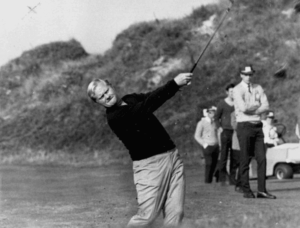
Why Jack Nicklaus Swing Work – Free of Modern “Rules”
Most people have Ben Hogan as their swing god, and sure, he’s awesome, but my personal favorite will always be Jack Nicklaus Swing. The Golden Bear. It’s the simplicity and effortless feel of it…
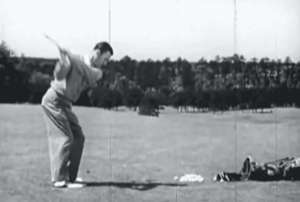
Ben Hogan 1940s Pre-Accident Swing Change – Power Updated
Nothing in golf quite compares to Ben Hogan’s ball striking induced dominance in the 1940s and 1950s. In 1948 alone he would win 10 titles including 2 majors. The 1940s pre-accident swing rebuild I…
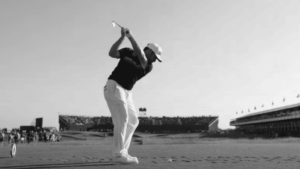
Old School Swinging Elements on Tour – A Modern Case Study
Modern top tier golfers definitely display old school swinging elements of the old greats. These swing styles are making their way back to the leaderboards today. This article relates to my teaching style of…