The Obstacles of Your Golf Swing – Why Swings Get Limited
Why don’t you swing as well as you want to? What’s in the way? I call the gap between your current state and your desired motion the obstacles of your golf swing.
My conclusions are derived from a decade of coaching and, more importantly, from self-exploration across basically every swing style in golf.
I’ve conducted seven major swing changes on myself, alongside coaching countless students, and I’ve picked up a lot of knowledge along the way.
For me, the obstacles have some roots that are worth discussing.
Obstacle 1 – The Perception of Your Motion
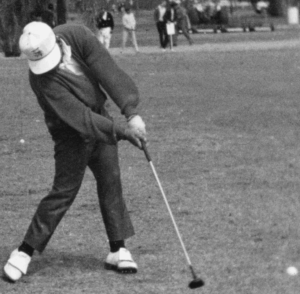
Most golf swings are “too small.” Let’s keep it simple: if you have a bigger motion, it becomes much easier to accomplish the athletic task of squaring the clubface on the golf ball.
You’ll also have a much larger pathway to accelerate the club and generate centrifugal force, which translates directly into clubhead speed.
Mechanics get all the attention in instruction, but simple concepts like this should never be underestimated.
If you start perceiving your motion as bigger, you’ll gain massive advantages. I’ve written an article on how most golf swings are misunderstandings, and you can read it here.
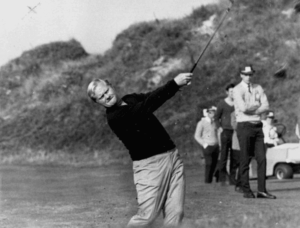
I wrote another article about why Jack Nicklaus swing works and that can be read here.
Obstacle 2 – Your Need for Control is Too Big
All golf swings are created while balancing the need for power and control. This relationship is often skewed toward control, which means you lose out on the benefits of being a great power creator.
To achieve a great golf swing, you need shallowness and slight inside tendencies. Sure, you can be a power fade player as well, but most base motions demand a slight inside entry into the golf ball—and these tendencies often come naturally with good power creation, at least in old school golf.
The point is: we all want power and control, and it’s much easier to add control to a power state than it is to add power to a control state.
Focusing too much on control comes with a whole bunch of disadvantages.
Obstacle 3 – No Appointed Leader = Too Difficult Swing
Most golfers, especially those interested in golf technique, have a mechanical checklist a mile long running through their heads over the golf ball. This isn’t good for anyone.
One of the biggest insights I’ve gained in studying golf is this: you need to appoint a leader to your motion. Something that drives all other things, something at the top of the hierarchy. For me personally, it’s the perception of a swing arc as the leader.
Why? Because when you do that, you can simplify your thought processes and become much more abstract in your motion.
In other words, you can start having a much easier-to-achieve golf swing.
Read this article about it, please.
Obstacle 4 – You Aim the Wrong Way
As a right-eye dominant right-handed player (70–80% of all golfers), we perceive the golf shot slightly skewed.
Over time, this causes us to aim slightly to the right on every shot.
This is very natural—but also very detrimental—because it makes the athletic task of hitting a straight shot much harder.
I can’t say for sure, but I would assume that 90% of over-the-top swings originate from this misperception.Put another way: your best shots are likely right-side misses, and you might not even know it. Check out my Youtube video about it!
Obstacle 5 – Lack of Knowledge = Tension and Doubt
I can’t say that I fully understand the golf swing, but I know enough to put my mind at rest. Do you?
In our modern world, we feel the need to know everything (I’m guilty of this myself—it’s what drove my decade-long study of golf), and that can actually be a problem.
When we don’t really know, we become tense.
If you truly know enough about your motion, your mind will relax and your perception of your golf swing becomes simpler.
You want to play golf in a “stupid” state, if you will—because that’s all the brain can handle over the ball.
You can read this rather complex article about this subject for more insight.
Obstacle 6 – Unrealistic Expectations of Abilities
Thinking that you need to hit a perfect golf shot every single time is, in my opinion, one of the biggest subconscious contributors to tension and a lack of enjoyment in this game.
Allow yourself to suck.
I miss all the time—and that’s fine. It’s natural. Golf is hard.
But here’s the key: you need to miss in a way that doesn’t cost you too many strokes. Most of my misses are (inspired by Jack Nicklaus) thin and slightly to the right. This is the minimal danger zone on most holes and this leads to less lost strokes when missing. To be honest this is basically the goal of your golf swing: produce a motion that works and makes the misses acceptable. Read this article about power and control where I walk into a bit deeper. Click here to open it.
This, the Big Arc Swinger pattern, is essentially one of three patterns that I base my FMM coaching around: a simple, old-school, swing-arc inspired motion that keeps the swing from being disastrous, while still maintaining achievability and power, so the game remains fun.
More FMM Project Articles
-
The Swinging Protocol – In the Core of all Great Golfers?
I have a special interest in the golf world, and that is to understand what actually built the best swings of all time. Not just how they look, but what truly built them. What…
-
A Powerful Golf Swing Clips It – Stop Chasing Divots
We are all performing golf swings based on inner images, muscle memory, and athleticism. These different subconscious images will shape how we perform our motion. A powerful golf swing clips it in a shallow,…
-
Perform Your Backswing in Front of Yourself – The Vertical Lift
The backswing might be the most difficult part of golf. Do it right, and while there are no guarantees of a perfect result, do it wrong and you’ve almost certainly ruined your chances of…



General Article Collection Pages
-
All Articles Library – All Creations in One Place
Everything I’ve created over the years. You have different filterings according to the list below. Wish…
-
DIY Swing Change – Advice on How to Successfully Change
Do It Yourself, DIY Swing Change, is what has driven me the last decade in my…
-
FMM Academy – Which Pattern Fits You?
My best live lessons are ten minutes long. Eight minutes of dialogue.5–10 balls struck. Because swing…
-
Golf Swing Styles – Categorization for Context
I categorize golf motion styles into systems for the sake of clarity and understanding. No golfer…




Video Based Articles
-
Low Downswing Hands — 2 Ways Without Letting the Club Fall
Low Downswing Hands – Two Ways Without Letting the Club Fall Many golfers are told that the downswing should begin by simply letting the club fall. For some players that idea works well, but…
-
Shallow Through Impact – Woosnam & O’Grady Release Exit
Shallow Through Impact – Woosnam & O’Grady Release Exit “Shallowing the club” has become one of the most discussed topics in modern golf instruction. Many golfers spend a lot of time trying to shallow…
-
Mechanical vs Athletic Drilling — When the Centipede Fell Down
Mechanical vs Athletic Drilling — When the Centipede Fell Down When the Centipede Fell Down “A centipede was happy quite,Until someone asked which leg goes after which…” The moment it started thinking about mechanics,…


Old School General Articles
-
How Lee Trevino Built One of Golf’s Most Accurate Swings
Most golfers trying to hack the golf swing just ruin it, and some, like Lee Trevino, win six majors. From an accuracy perspective, I would say that his motion is the most efficient I’ve…
-
Why Jack Nicklaus Swing Work – Free of Modern “Rules”
Most people have Ben Hogan as their swing god, and sure, he’s awesome, but my personal favorite will always be Jack Nicklaus Swing. The Golden Bear. It’s the simplicity and effortless feel of it…
-
Ben Hogan 1940s Pre-Accident Swing Change – Power Updated
Nothing in golf quite compares to Ben Hogan’s ball striking induced dominance in the 1940s and 1950s. In 1948 alone he would win 10 titles including 2 majors. The 1940s pre-accident swing rebuild I…