
Perform Your Backswing in Front of Yourself – The Vertical Lift
The backswing might be the most difficult part of golf. Do it right, and while there are no guarantees of a perfect result, do it wrong and you’ve almost certainly ruined your chances of making a solid swing. After years of study, self-experimentation, coaching and education efforts about different swing styles, I’ve come to realize one concept that’s more important than most people think: perform your backswing in front of yourself, and you’ve already won half the battle.
This article mostly relate to the Big Arc Swinger pattern that I teach in the FMM Swing Academy (Nicklaus, early Woods, early Rory etc). I actually made a long youtube deep dive of Mr Nicklaus on youtube too – check it out here around 6:07 into the video.
If you’ve read my work before, you know I often emphasize the idea that what I do isn’t always what you see. The backswing may be the biggest optical illusion in golf, because you have to think differently from what the observer perceives.
Put differently, every golf swing we see is just the visible outcome of invisible intentions — a blend of the golfer’s internal perception and the athletic ability that expresses it.
A Golf Swing = Perceptions + Coordinates/Intentions + Athleticism
The first layer of your golf swing is how you perceive your motion. For me, I see my swing as a big Paris wheel in front of myself — that’s the map, the overall shape and journey of the motion. (dive deep in this article if you wish)
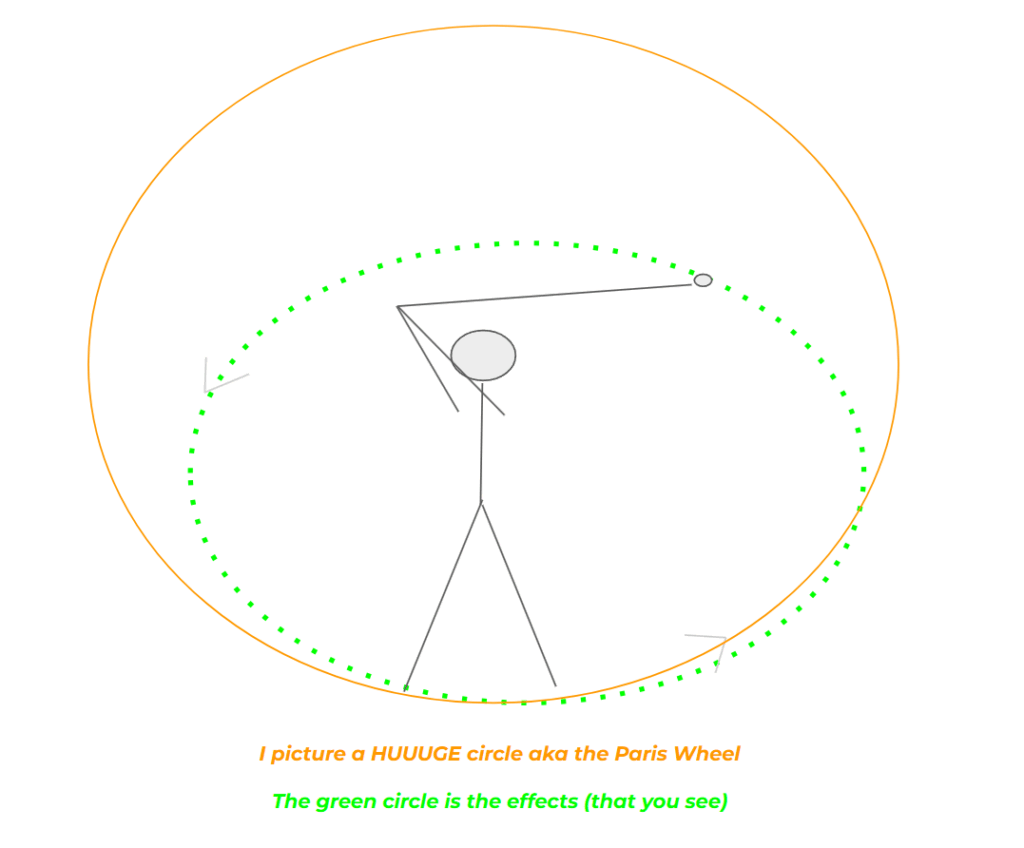
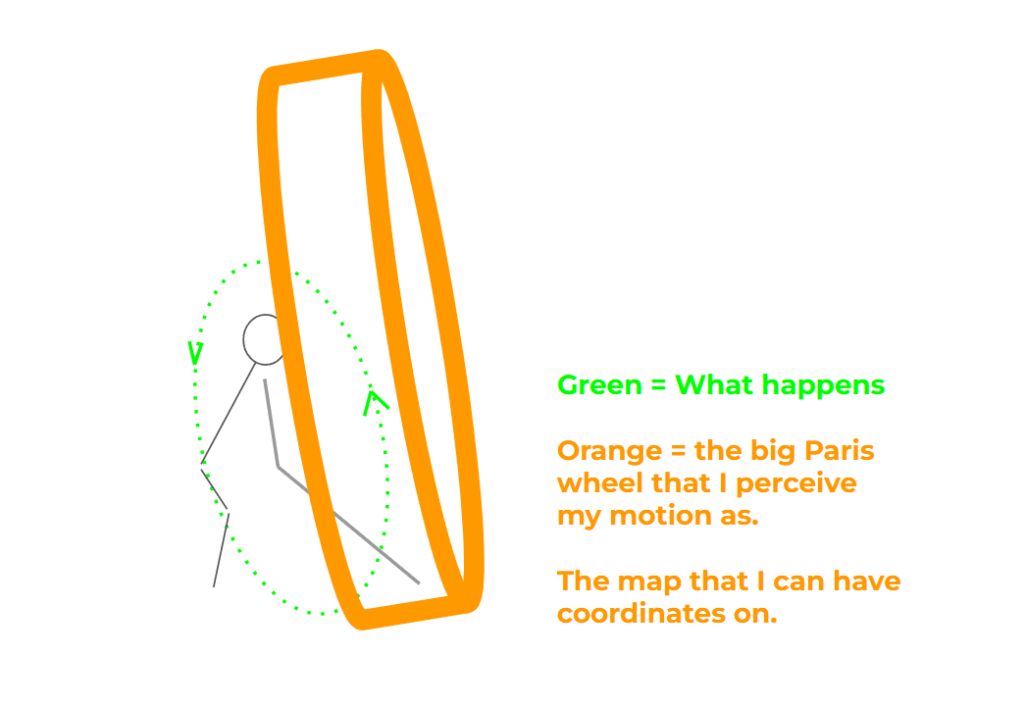
But to actually make use of that map, we need coordinates that guide the brain through specific points along the way. Think of these as checkpoints your mind can easily process. The trick is that we can’t be too detailed here — the brain simply won’t allow it when the motion is happening at full speed.
Long story short: make your coordinates super simple, and then train your athleticism to fill the void between those checkpoints.
My own coordinates look like this:
Point A – The start motion
Checkpoint B – The top backswing position
End Point C – The follow through position
When you learn to trust your athleticism between these coordinates, the motion starts to feel natural, powerful, and repeatable — without the burden of mechanical overthinking.If you want to dive deeper into this, I wrote a full article called “Your Golf Brain is Stupid – It Demands Simple Coordinates.”
Performing your Backswing – The Inner Layer Instruction
The starting motion (Point A) sets everything in motion — a motion that now needs to be catered to, directed, and coordinated.
Here’s exactly how I coordinate my backswing to Checkpoint B from a brain perspective.
I see my backswing as a vertical lift that is wide and high — a simple line.
It’s a LINE, not a twist or a turn.
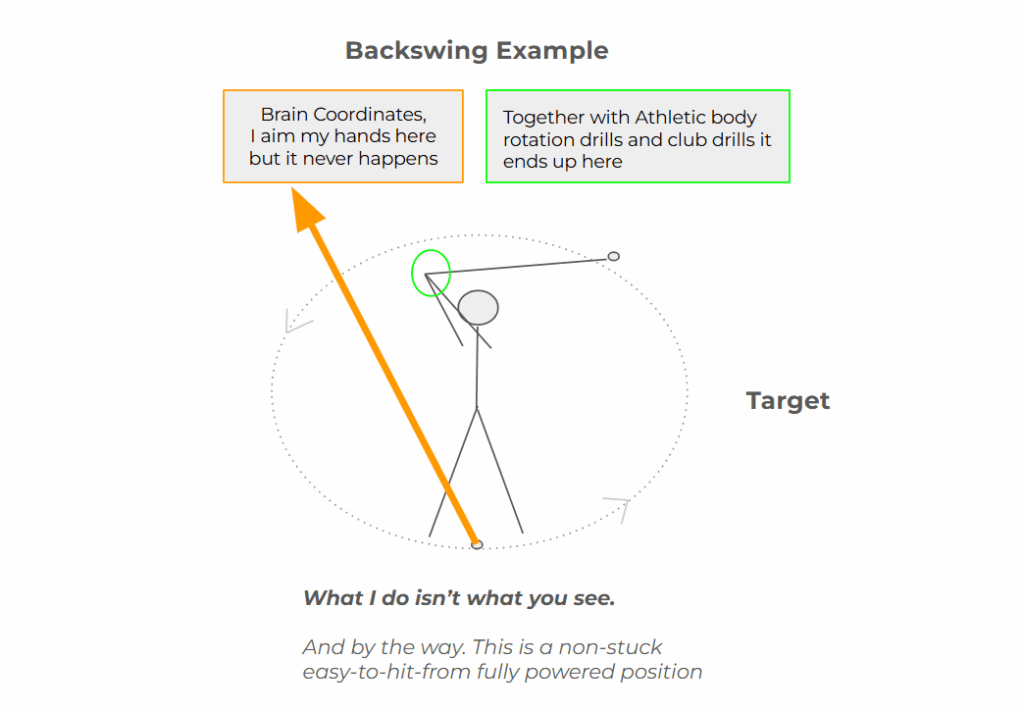
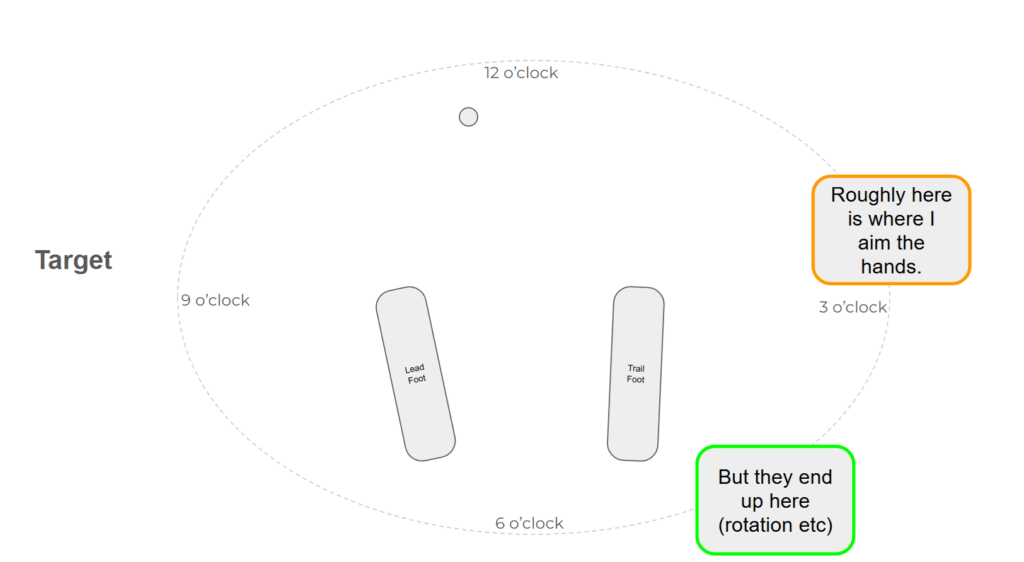
I fuse this simple line-based coordinate with my athletic feeling of creating a full body rotation — and voilà, I’ve got a great backswing.
To support this, I also train the athletic movement of spinning my arms, inspired primarily by the lead arm. This fills the “void” between Coordinate A and Coordinate B.
The old timers used to say, “Let the arms and wrists fold themselves because they want to,” and it’s absolutely true.
When you create a start to your swing that sets things in motion and gives your brain a simple line-based coordinate, all the advanced mechanics take care of themselves automatically.
And here’s the key point: You play golf in front of yourself and let the rotational effects play out its role through athleticism and mechanical byproducts.In its simplest form, it’s just lifting my hands (with width) up and out — about three meters high, roughly at three o’clock.
No Backswing Lifting?
The point is this: if you lift from a rotated body — something you can train through athletic drills like swinging a scythe around yourself — you’ll automatically create chest rotation. (of course this is contrarian to the modern sequence of arms first etc…)
And here’s the even cooler part: you’ve just fueled your swing arc with passive, gravity-driven dropping power, which in turn stimulates centrifugal force.
Another benefit? You’re loading your shoulders for the downswing action (as Pete Cowen likes to call it).
Some golf protocols tell you that lifting in the backswing is wrong. Wrong. I sincerely don’t get it.
Sure, there are different ways to perform a swing, but why would you block one of the biggest, lowest-hanging fruits in golf? Just picture 15-time Tour winner (including the Masters) and one of the smoothest swingers ever — Mr. Fred Couples. His backswing is basically a lift.
Sorry for the slight detour — but seriously, forget about “not lifting” in the swing. It’s one of the key attributes of golf’s best players throughout history.
No Backswing Width = Unnecessary Complications
The benefit of the wide vertical line is twofold.
First, it creates the lifting mechanism that naturally engages chest rotation. Second, it provides a non-stuck position — or in other words, the wide vertical line coordinate already has width built in.
Not creating enough width in the backswing comes with real disadvantages. If I aim my hands where they actually end up — let’s say I aim them green instead of orange — I’ll end up moving my arms across my chest.
Whenever we move our arms too much over the chest, we’ve opened the door for inconsistency.
That kind of swipe across the body is no good for anyone. It just makes life harder because now you have to re-swipe the arms back over the body and somehow time it perfectly.The “swiped-off” position also creates a set of unnecessary, difficult body angles — all of which work against a fully fluid, athletic motion.
Other Old School Awesomeness – Backswing Club Rotation
The FMM Project is about unveiling the common denominators of performance shared by all the great players of the past. I even study certain modern players, because not all the old secrets have been lost.
One of those timeless truths lies in the backswing — and specifically, the blade opening. It’s a move that breaks most modern “rules,” yet every great player — Nicklaus, Watson, Snead, Hogan, and many more — opened the blade significantly on the way back.
When you allow your blade to open and perform your backswing in front of yourself (while developing the athletic body rotation on the side), you set yourself up to use the swing arc in the most powerful and effortless way golf allows.
Swing change is possible for anyone. You just need to come to terms with how you perceive your motion — and how that perception might be limiting you.
Check out the FMM Swing Academy regarding old school movement fundamentals. This article would mostly relate to the Big Arc Swinger pattern.
More FMM Project Articles

The Swinging Protocol – In the Core of all Great Golfers?
I have a special interest in the golf world, and that is to understand what actually built the best swings of all time. Not just how they look, but what truly built them. What…

A Powerful Golf Swing Clips It – Stop Chasing Divots
We are all performing golf swings based on inner images, muscle memory, and athleticism. These different subconscious images will shape how we perform our motion. A powerful golf swing clips it in a shallow,…

The Obstacles of Your Golf Swing – Why Swings Get Limited
Why don’t you swing as well as you want to? What’s in the way? I call the gap between your current state and your desired motion the obstacles of your golf swing. My conclusions…
General Article Collection Pages

All Articles Library – All Creations in One Place
Everything I’ve created over the years. You have different filterings according to the list below. Wish…

DIY Swing Change – Advice on How to Successfully Change
Do It Yourself, DIY Swing Change, is what has driven me the last decade in my…

FMM Academy – Which Pattern Fits You?
My best live lessons are ten minutes long.Nine minutes of dialogue. One or two balls hit…

Golf Swing Styles – Categorization for Context
I categorize golf motion styles into systems for the sake of clarity and understanding. No golfer…
Video Based Articles

Jack Nicklaus’s Swing – The Inner Layer of his Motion
Jack Nicklaus’s Swing – The Inner Layer of his Motion Golf history is full of great swings, but few have stood the test of time like Jack Nicklaus’s. His technique wasn’t just effective —…

The Simple Golf Swing: Four Key Concepts Explained
The Simple Golf Swing: Four Key Concepts Explained Does the simple golf swing actually exist? It’s a reasonable question and my answer is this. There are definitely simplifications of the motion available for you…

Pre-Shot Routine: Learn from Scottie Scheffler’s Mini Swings
Pre-Shot Routine: Learn from Scottie Scheffler’s Mini Swings The pre-shot routine is the most underrated performance booster of your score in golf. Looking at Scottie Scheffler’s routine, the most consistent player for decades, makes…
Old School General Articles
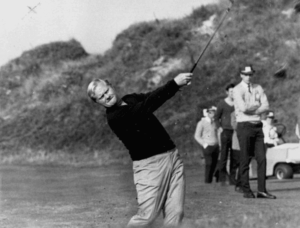
Why Jack Nicklaus Swing Work – Free of Modern “Rules”
Most people have Ben Hogan as their swing god, and sure, he’s awesome, but my personal favorite will always be Jack Nicklaus Swing. The Golden Bear. It’s the simplicity and effortless feel of it…
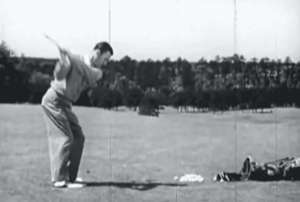
Ben Hogan 1940s Pre-Accident Swing Change – Power Updated
Nothing in golf quite compares to Ben Hogan’s ball striking induced dominance in the 1940s and 1950s. In 1948 alone he would win 10 titles including 2 majors. The 1940s pre-accident swing rebuild I…
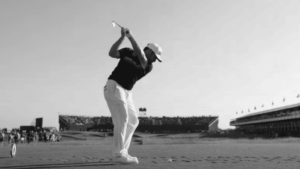
Old School Swinging Elements on Tour – A Modern Case Study
Modern top tier golfers definitely display old school swinging elements of the old greats. These swing styles are making their way back to the leaderboards today. This article relates to my teaching style of…