
Impact in Golf Explained: A Product of Swing Thoughts
Let’s talk about impact in golf and how your golf swing can influence it. After all, it’s the absolute decider of your shot’s potency.
Some golfers think about impact as something they need to actively create, while others treat it as an incidental point along a longer journey. I’m the latter.
Your Golf Swing = The Outcome of Perception and Swing Thoughts
To start off, I need to say this: our golf swings are the result of our inner perceptions, muscle memory, and conscious or subconscious swing thoughts. Open [this article] to learn more about swing thoughts in general and my take on them.
Most golfers don’t really know what they do, but it’s paramount that you understand how your swing works.
My golf swing, which leans on old-school fundamentals, is the outcome of my swing thought/intention in the downswing combined with how I inspire my follow-through. Over time, it fuses into one feel where I put more emphasis on the follow-through than anything else.
What’s yours?
Pre Impact + Post Impact = Incidental Impact in Golf
If you make impact the final destination of your journey, you’ll limit your ability to be the best you can be (in my opinion). The golf swing happens fast, and we can’t think too much during it—so let’s make it count.
What we do pre-impact in the downswing greatly affects the impact conditions, but it’s not solely responsible for the impact zone.
What we intend after the golf ball may have an even bigger effect on our impact conditions.
These two together create the incidental event that is impact. (And it doesn’t matter if you’re a hitter or a swinger—both, in my opinion, experience impact as incidental.)
Impact in Golf – Using the Timing Trick
To make the concept even more confusing, here’s the deal: we need to understand that the timing of our swing thoughts in the downswing and follow-through works very unintuitively.
Our downswing intentions need to happen sooner than we think. Because of the lag in our brain (x milliseconds) combined with the momentum of both the hand-path arc and the clubhead arc, we need to create whatever we want to happen as early as possible—without just casting the club.
This is where most golf swings go wrong, in my opinion. For instance, out-to-in patterns are often the result of delayed and misdirected downswing intentions.
Ok, to make it slightly more complex: the follow-through intention that you access in your mind post-impact (around p8.5, roughly) actually influences what happens before the intention occurs. In other words, our post-impact feels and thoughts influence the area before, during, and after impact.
Short summary: Act early in the downswing for better timing, and understand that your follow-through intention will affect previous parts of the swing arc journey.
Impact in Golf as a Punctual Event = Limitations
As mentioned, just thinking about impact as a punctual event—and essentially the goal of your golf swing—is, in my opinion, a highly limiting mindset.
With this way of thinking and performing, you actually lose the potential of the follow-through intention.
In my world, and in the world of most old-school golf, the post-impact follow-through feeling is incredibly potent. Look at the old-timer swings—they were super deliberate about finalizing their journey because they had to make the most out of their equipment.
Put differently: they couldn’t cheat with their gear.
Today, we can cheat and still produce decent shots, but the old-school fundamentals—where the impact area becomes completely incidental—are just as applicable now as they were back then.
Ever looked at, say, Tyrrell Hatton’s or Russell Henley’s swings and wondered how they can be tour players when their swings look like those of a solid single-digit golfer? It’s all in the incidental impact.
Coping with the Black Zone and making Impact in Golf more Reliable
I wrote another article where I talked about our thinking abilities in the golf swing. This isn’t important if you already have the motion in place, but odds are you don’t—and then you need to do something about it.
My preferred way of creating change isn’t to drill a billion times, but to use actual swing thoughts in the swing change process to propel certain movements. I call them abstract athletic intentions, and they are used to actually create mechanics. In my experience, this approach cuts the effort to about a fifth (it’s still cumbersome, but at least less…).
So what am I trying to say here?
Well, if you are deliberate about using intentions in the “thinkable” zones of the golf swing, over time you will stimulate your impact zone without having to actively manage it.
My Big Arc Swinger patternis basically a downswing centrifugal force stimulation, and the follow-through is an active centripetal move in the swing arc. The rest is just reactionary. Impact is simply an incidental event on the longer journey. I made a youtube video about it here also.
If you forget about impact and allow it to happen, my experience is that it becomes much more consistent—both in striking location and in low-point control.
Want to read more about what’s needed in a fully functional golf swing? Check this out.
Want to learn more about my coaching in the FMM Swing Academy? Check this page out.
More FMM Project Articles

The Swinging Protocol – In the Core of all Great Golfers?
I have a special interest in the golf world, and that is to understand what actually built the best swings of all time. Not just how they look, but what truly built them. What…

A Powerful Golf Swing Clips It – Stop Chasing Divots
We are all performing golf swings based on inner images, muscle memory, and athleticism. These different subconscious images will shape how we perform our motion. A powerful golf swing clips it in a shallow,…

Perform Your Backswing in Front of Yourself – The Vertical Lift
The backswing might be the most difficult part of golf. Do it right, and while there are no guarantees of a perfect result, do it wrong and you’ve almost certainly ruined your chances of…
General Article Collection Pages

All Articles Library – All Creations in One Place
Everything I’ve created over the years. You have different filterings according to the list below. Wish…

DIY Swing Change – Advice on How to Successfully Change
Do It Yourself, DIY Swing Change, is what has driven me the last decade in my…

FMM Academy – Which Pattern Fits You?
My best live lessons are ten minutes long.Nine minutes of dialogue. One or two balls hit…

Golf Swing Styles – Categorization for Context
I categorize golf motion styles into systems for the sake of clarity and understanding. No golfer…
Video Based Articles

Jack Nicklaus’s Swing – The Inner Layer of his Motion
Jack Nicklaus’s Swing – The Inner Layer of his Motion Golf history is full of great swings, but few have stood the test of time like Jack Nicklaus’s. His technique wasn’t just effective —…

The Simple Golf Swing: Four Key Concepts Explained
The Simple Golf Swing: Four Key Concepts Explained Does the simple golf swing actually exist? It’s a reasonable question and my answer is this. There are definitely simplifications of the motion available for you…

Pre-Shot Routine: Learn from Scottie Scheffler’s Mini Swings
Pre-Shot Routine: Learn from Scottie Scheffler’s Mini Swings The pre-shot routine is the most underrated performance booster of your score in golf. Looking at Scottie Scheffler’s routine, the most consistent player for decades, makes…
Old School General Articles
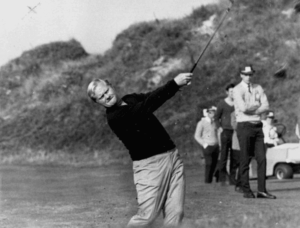
Why Jack Nicklaus Swing Work – Free of Modern “Rules”
Most people have Ben Hogan as their swing god, and sure, he’s awesome, but my personal favorite will always be Jack Nicklaus Swing. The Golden Bear. It’s the simplicity and effortless feel of it…
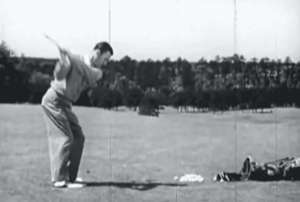
Ben Hogan 1940s Pre-Accident Swing Change – Power Updated
Nothing in golf quite compares to Ben Hogan’s ball striking induced dominance in the 1940s and 1950s. In 1948 alone he would win 10 titles including 2 majors. The 1940s pre-accident swing rebuild I…
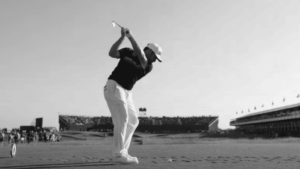
Old School Swinging Elements on Tour – A Modern Case Study
Modern top tier golfers definitely display old school swinging elements of the old greats. These swing styles are making their way back to the leaderboards today. This article relates to my teaching style of…