Swing the Clubhead – How you can go BEYOND it
“Swing the clubhead” is a powerful idea.
And I guess we could basically leave the article right there 🙂 BUT I’ve actually found ways to use the swing the clubhead idea together with very simple “add on concepts”.
This article builds on the foundation of the Power Blueprint:
- Power Layers → how the engine is built
- Release Styles → how power is transmitted
If you haven’t gone through those yet, start there.
This is where we move into Layer 2 and Layer 3 — where speed actually begins to show up.
Speed from the Inside as a Foundation
There’s one principle that matters:
Speed from the inside.
If you don’t have that, nothing else holds. You might still hit shots, but you’re constantly compensating — trying to make the club behave instead of building a motion that produces speed naturally. Swing the clubhead as an idea and a concept delivers exactly that. Proper speed from the inside.
Taking it Further – Power Counterpart — Finding Ground Support
A clubhead swing needs something to work against.
That’s where the power counterpart comes in.
Take the Big Arc Swinger pattern.
Without support, you can create a clean motion — but the speed will be limited.
Now introduce the counterpart:
- Move into the lead side earlier
- Establish pressure
- Give the pendulum something to work from
The result?
Speed increases immediately — without adding effort.
Same intention.
Different support.
Another example is the Backside Chop & Push pattern.
On its own:
- The motion feels good
- But the output is limited
Now add the “hula” slide:
- Shift the body
- Establish a base
- Support the motion
Suddenly, the same swing produces more speed.
This is the pattern:
You don’t create speed by forcing it.
You create it by supporting the motion correctly.
One Step More Follow-Through — Where Acceleration Expands
Once the base is supported, you can go further.
Now you can start using the follow-through to stimulate acceleration.
In the Big Arc Swinger:
- By committing to the top of the follow-through
- By allowing the arc to fully express
You unlock additional speed —
but more importantly, the motion becomes more repeatable.
In the Backside Chop & Push:
- Use the trail foot
- Push toward the target
- Align the body with the direction of energy
Now the swing starts to feel complete.
Not just a motion —
but a directed athletic action.
Final Thought
Different patterns use different tools.
But the structure is always the same:
- Build the base (swing the clubhead)
- Add support (power counterpart)
- Expand the motion (follow-through usage)
“Swing the clubhead” is the start.
Support it — and you can supercharge it.
Swing Development for Real
If you’re serious about swing development, the best question you can ask yourself is this:
Which pattern fits you?
Take the quiz below. It only takes two minutes.
START THE JOURney – FIND YOUR OLD SChool PATTERN
Your inspirations and your subconscious view of the golf swing matter more than anything when it comes to making a lasting swing change. The goal is to find the pattern that fits you best. Take the quiz and check out the best choice for you below:
FMM EDUCATIONAL PATTERN PAGES
-
Trail Power Hitter Pattern: The Invisible Vertical Power
THE GOLF SWING IS INVISIBLE You can’t see what I really do. I…
-
Aggressive Fluid Release Pattern: Cracking the Hogan Enigma
Cracking THE IMPOSSIBLE ENIGMA? First attempt: seven years ago. There I failed with…
-
Big Arc Swinger Pattern: From Nicklaus to Woods to Scheffler
What’s a big arc golfer? You see that person with a swing that…



Main Website Pages
-
FMM Video Articles — See It. Read It. Understand It.
In early 2025, I started my YouTube channel (find it here), and the format has really grown on me. It allows me to explain, demonstrate, and cover things that text simply can’t. The real…
-
All Articles Library – All Creations in One Place
Everything I’ve created over the years. You have different filterings according to the list below. Wish to watch Youtube videos instead? Then click here to open Wish to visit my Skillest Profile (coach app)?…
-
FMM Academy – Which Pattern Fits You?
Golf instruction has never suffered from a lack of information. It has suffered from a lack of understanding. The FMM Academy was built to help golfers understand why great swings work, how different players…
-
Swing Styles Articles – Explaining Old School Variations
I categorize golf swings into different styles for the sake of clarity and understanding. No golfer fits perfectly into a single swing style, but without a structured framework, you’re essentially shooting in the dark….




Old School General Articles
-
Building a Golf Swing from Scratch – Understand to Change
Building a Golf Swing from Scratch Building a golf swing from scratch is one of the subjects I find most interesting in golf. There are countless variables involved: the wrists and forearms, the arms…
-
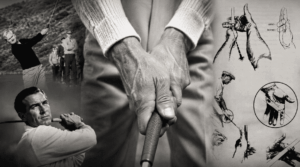
Ben Hogan vs Jack Nicklaus Grip: What’s the Real Difference?
All the old-timers cared about one thing first and foremost. Almost as if it were the gatekeeper to their swing worlds. The grip. Why is it so important? Because it directly connects to how…
-
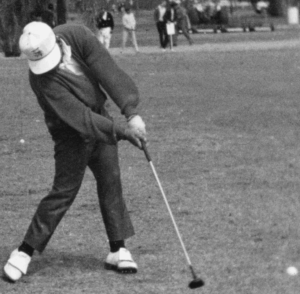
How Lee Trevino Built One of Golf’s Most Accurate Swings
Most golfers trying to hack the golf swing just ruin it, and some, like Lee Trevino, win six majors. From an accuracy perspective, I would say that his motion is the most efficient I’ve…

More FMM Project Articles
-
The Swinging Protocol – In the Core of all Great Golfers?
I have a special interest in the golf world, and that is to understand what actually built the best swings of all time. Not just how they look, but what truly built them. What…
-
A Powerful Golf Swing Clips It – Stop Chasing Divots
We are all performing golf swings based on inner images, muscle memory, and athleticism. These different subconscious images will shape how we perform our motion. A powerful golf swing clips it in a shallow,…
-
Perform Your Backswing in Front of Yourself – The Vertical Lift
The backswing might be the most difficult part of golf. Do it right, and while there are no guarantees of a perfect result, do it wrong and you’ve almost certainly ruined your chances of…