MORAD 80s Trail Power Hitter Pattern – Awesome Simplicity
As mentioned in the MORAD swing pattern article, I’m a huge fan of Mr. O’Grady’s contribution to the golf world. It’s arguably the most impactful effort in golf, period.
But personally—based on how I teach and what I focus on—I only care about the 80s swing. I place one factor at the very top of the hierarchy when it comes to development: achievability. The 80s model is achievable; the later versions demand far too much from the golfer, both mentally and physically.
I’ve made it my absolute goal to take these older swings, the ones that function at the highest level, and strip away the unnecessary contextual layers that were driven by the key movers.
80s Pattern – Core Power Profile in Depth
If you had to point to one element that matters more than anything else here (impossible, but let’s give it a try), it would be the trail arm and the club’s action in the downswing. Everything revolves around it.
The top-of-backswing position features a cupped lead hand, which stores a huge amount of power in the form of ulnar deviation (wrist cock). This produces almost Hogan-like lag positions, though in my opinion it’s a different release style compared to Hogan, Snead, Trevino, etc. (I call them backside releasers.)
A centrifugal release can be stimulated in different ways, but in this protocol everything revolves around the ulnar → radial deviation sequence. There’s an interplay here between a casting motion and a lag-inducing motion that must be understood athletically. I believe this is where Mr. O’Grady separated himself from his students—the over-casting input value he had naturally put speed into the shaft, which propelled the hands along the hand-path arc.
Of course, there are more components involved, but this is the core. It dictates how and why the backswing is performed and how the body is positioned.
Once the downswing is ignited with trail-arm power, then you can start improving it.
And here’s the other really cool part: the early re-cock of the wrists was made possible by the liveliness of the club. This added blade-control elements and speed acceleration through the impact area. Voilà—now you have a great club action and a reactive body that’s good enough for high level golf.
You can of course also stimulate more power with intentful synchronized body rotation through the strike IF you can do it. It’s more optional than anything else. (More on that in the section on supportive body behavior.)
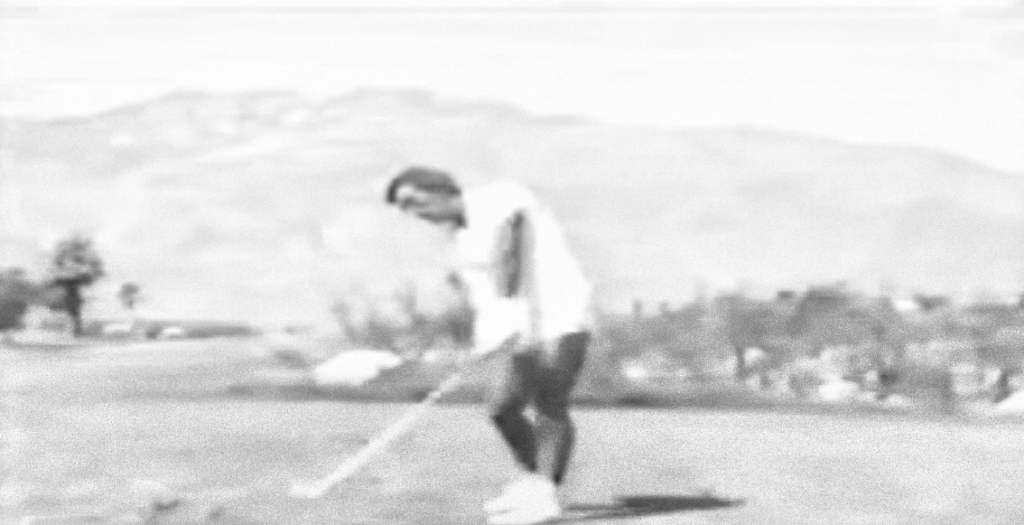
You may also have noticed that Mr. O’Grady uses very low hands in both his setup and impact. This supports the use of flatter lie angles, which in turn helps eliminate the dreaded big left miss. Fundamentally, this release is what I call a front-side release, where the clubface enters a relatively early closing spiral. The flatter the clubs, the easier it is to apply power and maintain control without the blade spinning into chaos.
Another important point: this is a true-loft swing. It’s not about artificially forcing shaft lean through manipulation of the body, hands, or club. Counterintuitively, you can still deliver low, compressed, awesome strikes from this core motion simply by directing your energies properly after impact.
Suppporting Body Positions
Before the super-complex protocols of the 90s and 2000s, the model was built around a centered sternum and a motion that essentially had a fixed geometric center.
This stuff isn’t hard to achieve. We’re not talking about lateral bends or complex spinal tilts. You set up with a bit of foot flare and some hip flex, make your backswing, maintain that hip flex, and keep a neutral spine. Less has never been more.
Synchronized body rotation or reactive body?
You will always have some reactive body motion once you understand how the club is powered in the downswing—because the downswing is driven from your ground-pressure profile. The way the club behaves after impact will naturally stimulate your hands to move, and that produces a supporting body reaction. For many golfers (including some high-level tour pros, in my opinion), this reactive pattern is enough.
Remember the power profile: the trail-hand power style produces a tremendous amount of speed. That means your manually “motivated” rotation demand is much lower than in other protocols.
(For explanation purposes: compare it to a more baseball-inspired swing. In that model, downswing speed is created by a huge, intentional rotational engine—a sling-style system—where big rotation is the power source. Completely different from this protocol.)
With that said, Mr. O’Grady himself does stimulate body rotation through the strike. This requires a bit more 2nd axis tilt, paired with a slightly more forward ball position.
The core concept is simple: you get to choose.
- Want mostly reactive body rotation? → Play the ball a bit back.
- Want more stimulated body rotation? → Move the ball forward and add a touch more 2nd axis tilt.
It’s not more complicated than that.
Control Parameter 1 – Trail Arm Extension
There are a whole bunch of radius locks involved in the pattern but let’s simplify to make sense out of it.
Once you figure out the power leader — how to use the trail arm and the club, and in what timing — a lot of the rest just works on its own. Yes, it requires a backswing that actually fits the pattern, but beyond that you can more or less go ahead and unleash.
Mr. O’Grady made a statement in the 80s that I really like: “I’m down to my triceps muscle, that’s all I need for control.” That says it all, doesn’t it?
If you simply make sure to extend your trail arm after the ball (which actually means you need to start extending it before the ball to deal with momentum — more on that later), then you’ve essentially eliminated the big left miss. Nice, right?

Control Parameter 2 – Early Recock
Another powerful control element is how you work the club back upward through wrist action. For longer clubs especially, this is a key mechanism—not only for adding speed but also for gaining control over clubs that are traditionally more difficult to strike consistently.
This lines up well with Ian Woosnam’s old comment that the release feels like “hitting the wheat of the shaft.” In my own terminology, I’d phrase it as: the release exit is like striking the wheat of the shaft.
The mechanical advantage here is significant. The upward exit creates natural shallowing in the way the club leaves the strike zone, which means you can essentially use the same swing for both wedges and the driver.
With this pattern, Mr. O’Grady produced a high, low-spin fade—arguably the ideal driver shot shape. Hard to beat, right?
Control Parameter 3 – Intentful Body Rotation (Optional)
Again, do you need intentful added body rotation in the impact area or can you just go reactive with the body?
If you add the rotation (if your brain allows it) you will add some speed and some control to the mix. It’s master level stuff that of course Mr O’Grady had in his motion.
At the end of the day it’s all about individual preference.
Key Execution points – Centered Body in Transition
Your power system will almost always induce some kind of shift in the spine position depending on the application and style.
With a trail arm downswing powered (80% of your power ish) motion this will for sure enforce more 2nd axis tilt than most want. If you have too much 2nd axis your low point comes too far backwards and even a healthy amount of chest rotation won’t save = you need to push your hands in that case which in turn diminishes the potential of the original power package.
This is why I sometimes talk about a slight negative spine tilt in the top backswing position. It’s not because I want a tilt but I’m offsetting for what the applied power will do with the neutral state.
In other words. To remain centered and neutral in the spin position you need to either be extremely core strong or utilize small mechanical fixes to accommodate the quest of being centered.
Key Execution Points – Power Package Application
So here’s the thing. In all golf education and instruction there’s always one small layer that’s missing and that’s this. The cause and the effect aren’t the same thing.
What I see isn’t what you actually do. I see the effect of the cause.
If I’m going to perform the club action portrayed in the power package here I need to do it EARLIER than I think because momentum (together with our initial brain lag) demands it. I often feel like I’m dumping my club a good 20 cm before the ball and that’s after performing 1000s of shots like this.
Here’s where my work together with Per Källfelt really shines. If you allow yourself to “cast” the correct part of the golf club you will create this club to hands to centrifugal force interplay that stimulates the right amount of club closure in time for the strike.
MOST get this wrong. 90% probably…
Summary & Other Articles
If you understand execution layer you can actually play all kinds of fun shots that involve as much or as little body rotation as you want. I have one pattern that I play around with from time to time that involves an early ball position and a trap draw pattern that takes my 95 mph 7 iron, makes it 90 mph but it’s so simple that I can hit the ball blind folded.
All parts of Mr O’Gradys 80s pattern are fun to study, but THE KEY is to understand the unintuitive nature of how to perform the power package.
Thank you for reading. Hopefully you got something out of it!
A more contextual different era based MORAD article is here.
A more history based article here.
And my FMM Swing Academy (with the trail power hitter protocol) you find here.
START THE JOURney – FIND YOUR OLD SChool PATTERN
Your inspirations and your subconscious view of the golf swing matter more than anything when it comes to making a lasting swing change. The goal is to find the pattern that fits you best. Take the quiz and check out the best choice for you below:
FMM EDUCATIONAL PATTERN PAGES
-
Trail Power Hitter Pattern: The Invisible Vertical Power
THE GOLF SWING IS INVISIBLE You can’t see what I really do. I…
-
Aggressive Fluid Release Pattern: Cracking the Hogan Enigma
Cracking THE IMPOSSIBLE ENIGMA? First attempt: seven years ago. There I failed with…
-
Big Arc Swinger Pattern: From Nicklaus to Woods to Scheffler
What’s a big arc golfer? You see that person with a swing that…



Closely Related Articles
-
3 MORAD Swing Eras – My Take on the Genius’s Patterns
So Mr. O’Grady was less than pleased with his golf swing. Coming from a failed Nicklaus pattern, he worked very closely with Homer Kelley (the founder of The Golfing Machine) to understand why his…
-
Contemporary MORAD – Modern Presence and Influenced Coaches
MORAD has influenced more high level golf than anything I’ve come across during my last decade deep dive into golf. In the 80s Mr O’Grady taught somewhere between 30-50 players while playing on tour…
-
The Best Story in Golf Teaching – Mac O’Grady Event Timeline
I’ve never met Mac O’Grady. In all honesty I’m happy I haven’t because these types of personalities deeply intrigues me. Meeting him and climbing to deep down the rabbit hole of MORAD would have…
Some FMM Swing System Technique Posts (with Videos)
-
Control in Golf – Understanding Your Impact Area
Control in Golf – Knowledge paves the way.. If you understand how to generate and accelerate power while also being aware of clubface closure, you unlock the potential for control in golf. This is…
-
Collin Morikawa’s Swing Change: His New Old School Swing
Colin Morikawa Before and After: Why His New Swing Looks More Old School The Rise of Modern Precision When Colin Morikawa arrived on the PGA Tour, he looked like the future of golf. His…
-
Shaft Lean in Golf: Why You Shouldn’t Force It
Shaft Lean in Golf: Why You Shouldn’t Force It Forcing shaft lean can be one of the most detrimental swing thoughts I know. Yes — if you already have a master-level motion, you can…

FMM Project Articles
-
Perform Your Backswing in Front of Yourself – The Vertical Lift
The backswing might be the most difficult part of golf. Do it right, and while there are no guarantees of a perfect result, do it wrong and you’ve almost certainly ruined your chances of…
-
The Golf Swing Arc: The Leader Behind Your Motion
The highest level of swing technique is to be able to simplify the motion. Over the years I’ve been able to understand what matters and maybe even more importantly, what doesn’t matter, in a…
-
Most Golf Swings Are Misunderstandings — Perception Problems
What’s the difference between a good ball striker and a struggling golfer? Is it some kind of unique skill set reserved for the most athletic or talented? Heck no. It’s all about how we…